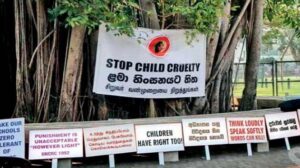
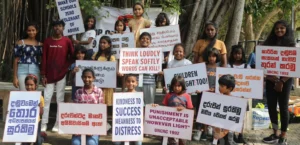
“Sri Lanka has become an unsafe environment for women and children,” said Dr. Tushara Wickramanayake, fondly known as Tush. A family physician and founder and chairperson of Stop Child Cruelty Trust, she has worked in child welfare since the 2004 tsunami and became a child rights advocate after her own daughter was subjected to corporal punishment and mental abuse in school in 2018.
Working with abused children
Child abuse can be physical, sexual, mental, or neglect. Physical abuse, cruelty, and corporal punishment remain the most common forms of abuse in Sri Lanka and around the world. Visible injuries can appear quickly, but the mental impact can take years to surface. Dr. Tush stresses that mental scars are often overlooked even when they shape a child’s adulthood and wider community life.
Her view is that every form of abuse should be treated with zero tolerance, regardless of whether the behavior is normalized in the child’s environment.
When abuse is suspected
The first and simple golden rule is: believe the child.
Many cases stay hidden because the abuse happens at home, or adults fear scandal and stay silent. If a child hints at harm, do not dismiss them or protect the alleged offender to save a family name or reputation. Children may show warning signs such as withdrawal, refusal of school, sleep or eating disturbances, mood changes, secrecy, or sudden behavior changes.
Dr. Tush recommends healthy parent-child communication, a no-blame environment, and a simple safety framework: red for shout, orange for run, and green for tell someone they trust. She also encourages each child to identify two or three trusted adults.
Rewarding and challenging work
She says the most rewarding part is seeing a child recover enough to function at their own highest healthy capacity, even if that means something as basic as getting to school consistently. The hardest part is dealing with slow bureaucracy when trying to secure care, support, and justice through state mechanisms.
Her approach centers the family unit, with support from education, health, justice, rehabilitation, social work, and caregiver support systems. She emphasizes that caregivers also need education, economic support, and mental health support.
A difficult case
One recent case involved two sisters, aged 17 and 14, who were suspected of sexual harassment by their father in a remote village. Even without conclusive evidence, the girls' accounts were strong enough to take immediate action. The mother had very limited income, while the father had influence over the police and local systems.
The response included court action to restrict the father’s access, attempts to secure safe housing, relocation support for the family, and eventually school transfer support after the father blocked the release of school documents. The girls later settled into a better school with counselling support and continued to keep in touch.
What child protection means
Dr. Tush distinguishes between safeguarding, child protection, and child protection programs. Safeguarding is the broader preventive approach that reduces risk before harm happens. Child protection is the direct response when a particular child is at immediate risk. Child protection programs are targeted initiatives, such as advocacy for reform and stronger legal protections.
She also points out that Sri Lanka still lacks systematic safeguarding policies, which leaves abuse responses inconsistent and reactive instead of preventive.
Sri Lanka's current mechanism
Sri Lanka ratified the UN Convention on the Rights of the Child in 1991, but many protections are weakly implemented in practice. Dr. Tush cites the National Child Protection Policy, circulars against physical punishment in schools, the collapse of the National Partnership to End Violence Against Children, and the backlog of child abuse cases as signs that reform has not been translated into consistent protection.
She argues that the child welfare agenda has not yet been treated as a national political priority, which leaves children vulnerable in schools, care homes, and family settings.
Immediate government action
The three immediate steps she highlights are a presidential task force for children, stronger budget allocation for education and child welfare, and completion of legal reform to abolish corporal punishment. She wants the bill to move from cabinet approval to parliament without delay.
Her wider message is clear: child protection is not just a social issue, it is a national responsibility.